Mitochondria are the power plants of every cell. They produce ATP — the universal “currency” of energy in the body. With age, mitochondria lose efficiency: their DNA gets damaged, the electron transport chain malfunctions, and the production of free radicals increases. This process is called mitochondrial dysfunction, and it underlies most age-related diseases — from diabetes and neurodegeneration to sarcopenia and chronic fatigue.
Two research peptides — MOTS-c and SS-31 — target precisely this problem, but they work through different mechanisms.
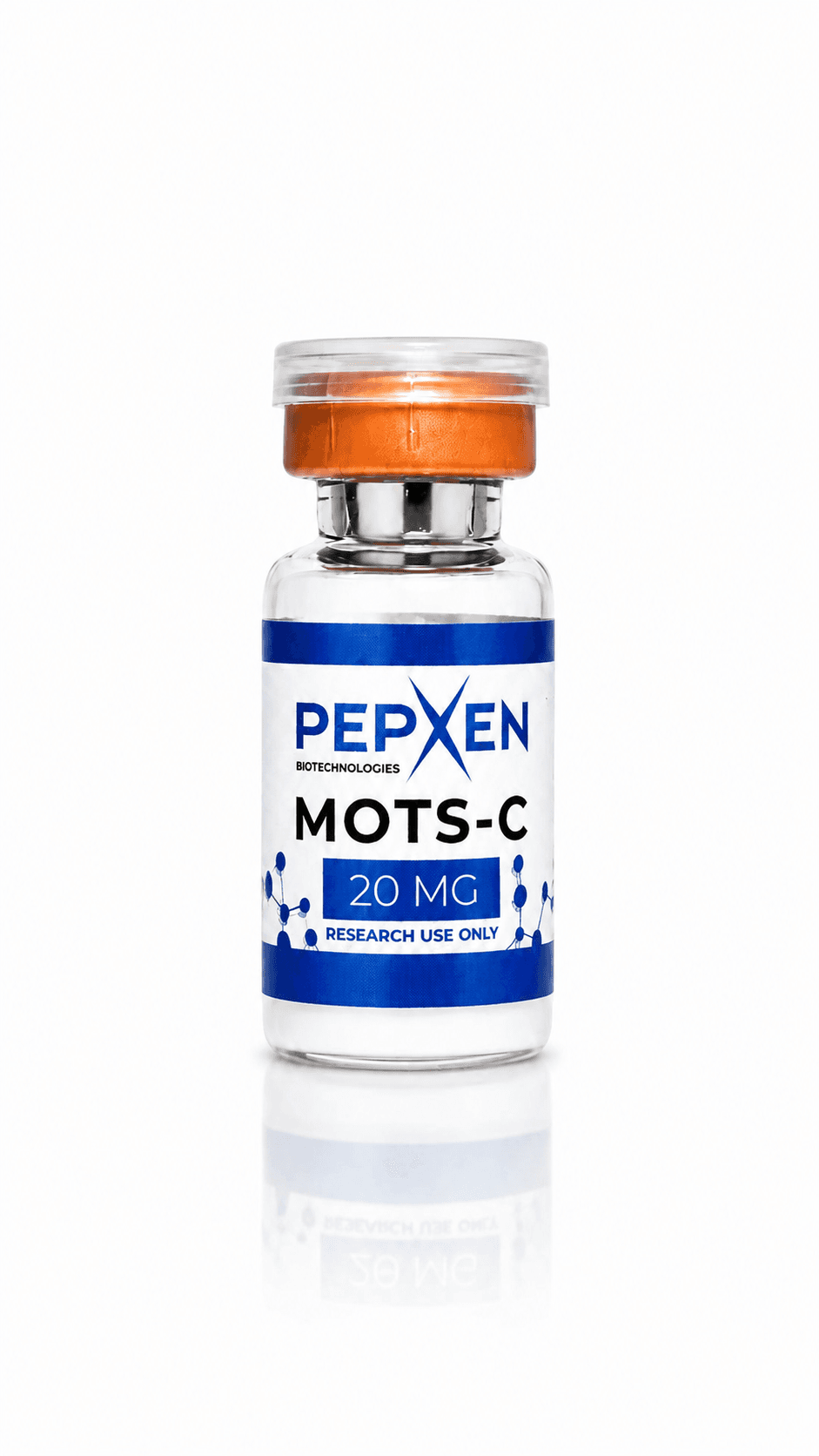
MOTS-c (Mitochondrial Open Reading Frame of the 12S rRNA Type-c) is a 16-amino-acid peptide encoded by mitochondrial DNA. It was discovered in 2015 by the group of Professor Pinchas Cohen at the University of Southern California. This was a revolutionary discovery: it was the first time mitochondria were shown to produce their own signaling peptides that affect the metabolism of the whole body.
The main effects of MOTS-c:
A study (Lee et al., Cell Metabolism, 2015): mice given MOTS-c showed resistance to weight gain on a high-fat diet, improved glucose tolerance, and increased physical endurance. In older mice, MOTS-c significantly improved metabolic parameters, bringing them closer to those of young animals.
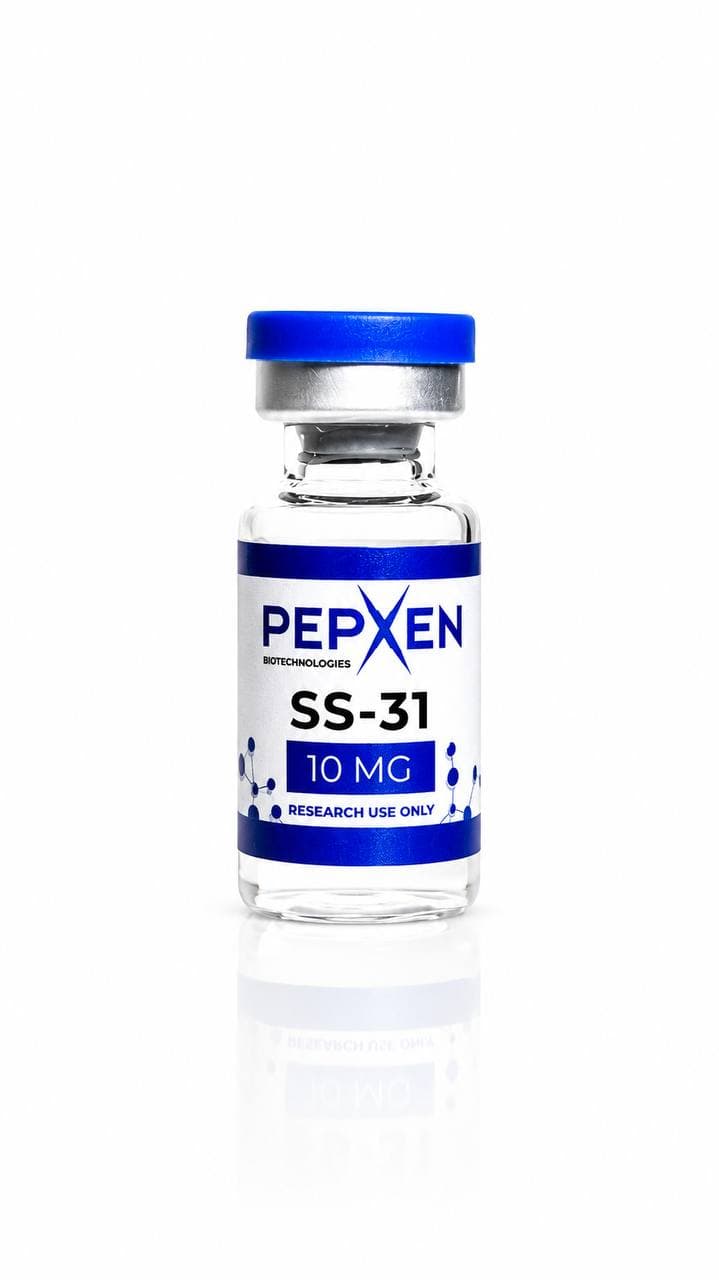
SS-31 (D-Arg-Dmt-Lys-Phe-NH2) is a synthetic tetrapeptide developed by Professor Hazel Szeto at Cornell University. Unlike most antioxidants, which cannot penetrate into the mitochondrion, SS-31 selectively accumulates on the inner mitochondrial membrane thanks to its electrostatic interaction with cardiolipin.
The mechanism of action of SS-31:
An analogy can be drawn: MOTS-c is the “coach” that makes the body work more efficiently. SS-31 is the “mechanic” that repairs the cells’ power plants. Both are needed, but for different tasks.
MOTS-c:
SS-31:
MOTS-c is being actively studied in the context of metabolic syndrome, type 2 diabetes, and aging. SS-31 (under the name Elamipretide) has completed several phase 2–3 clinical trials for the treatment of mitochondrial diseases (Barth syndrome) and heart failure. Both peptides represent the cutting edge of biogerontology — the science of the biological mechanisms of aging.